Tuesday, 15 May 2012

Finnair's Asia Strategy


Finnair is the world’s sixth oldest airline. It was founded on November 1, 1923 as Aero O/Y. The carrier gone through lots of tough times including both world wars and faced an uncertainty after those wars. The war also forces the 1940 Olympic Games that were supposed to hold in Helsinki to be cancelled. But, the airline is still staying strong today as one of the leading carriers in Europe. Not until June 1968, the name Finnair was only officially adopted. Today, the airline is a member of oneworld alliance since 1999. It is ranked 4-star by Skytrax and carriers around 10 million passengers per year to 15 domestic and 55 international destinations. The airline is also rated as one of the safest airline in the world.

Recently, the airline begins flying to Chongqing, one of the largest and fastest-growing cities in China. In terms of population, the city is just behind of Shanghai and Beijing. This service will be served by both Airbus 340-300 and Airbus 330-300 aircraft four times weekly. In addition to Chongqing, Finnair has daily flight services to Beijing, Shanghai and Hong Kong. There is an interesting trend among European carriers choosing to fly new routes to secondary Chinese cities instead of flying to Shanghai, Beijing and Guangzhou alone. In April, Air France commenced a three weekly service from Paris to Wuhan, operating by Boeing 777-200ER with 309 seats. While back in March, Lufthansa resumed three weekly flights to Shenyang using an Airbus 340 aircraft. The flight will continue to fly to Qingdao, a new destination from Lufthansa. While, IAG member British Airways is expected to increase flights or start a new route to China very soon after successfully acquired bmi’s slot at Heathrow.


This is the departure hall of Helsinki’s Airport’s Terminal 2. The main hub of Finnair’s operation. 
Finnair has 8 Airbus 330-300 and 7 Airbus 340-300 aircraft in their fleet. These are the only aircraft in Finnair’s fleet that are capable of flying more than 6 hours. Besides that, the carrier has an order of 11 brand new Airbus 350-900 which delivery is expected to start in 2015. The rest of Finnair’s fleet consists mainly of Airbus 320 family aircrafts and the Embraer E-jets. Apart from flying to New York, Finnair deploy all their long range aircraft to destinations in Asia, as they aim to be one of the biggest transfer hubs in Europe for flights from Asia. The carrier has an added advantage to others. The airline’s main hub in Helsinki-Vantaa Airport offers the shortest connections between Asia and Europe. Besides, Finnair’s Helsinki hub will not be that busy and chaotic compare to Paris, London and Frankfurt. The airport was listed as one of the most punctual airport in Europe; it has been designed expressly with transfer traffic in mind. All arrivals and departures are located in the same building. I compare the travel times of major European airlines to some Asia airline hub below:

*One way travel time from Europe to Asia
Destination:
(one-way)
Paris
(Air France)
Amsterdam
(KLM)
London 
(British Airways)
Frankfurt (Lufthansa)
Helsinki (Finnair)
Beijing
9hr50min
9hr20min
9hr50min
9hr15min
7hr50min
Tokyo
11hr30min
11hr
11hr35min
11hr5min
9hr40min
Hong Kong
11hr35min
11hr15min
11hr30min
11hr5min
9hr50min
Bangkok
11hr20min
10hr45min
11hr15min
10hr35min
10hr5min


Looking at the table above, Finnair always has a shorter flight time to any Asia destination compare to any airlines in Europe. Previously, the airline was the first airline in Europe to operate a non-stop service to Japan in 1983. Soon after that, the carrier quickly introduced flights to Singapore via Bangkok on the same year. This shows that the airline has a long standing history of operating flights to Asia, as the airline always advertise themselves “The fastest link to Europe from Asia” in commercials. Despite being relative small compare to the likes of IAG, Lufthansa, Air France-KLM; Finnair operates up to 72 weekly flights to 11 Asia destinations. In China alone (including Hong Kong), the carrier operates 25 weekly flights, almost the same number as IAG’s 26.

In May 2010, the airline launched its Vision 2020, hoping to be the number one carrier in the Nordic region and also the top three carriers flying to Asian destinations. The carrier hopes it can increase its Asian presence by offering the best flight connections and competitive price. Part of this strategy is the launch of a revised livery for its fleet, featuring a basic all-white aircraft with a stylized “F” on the aircraft’s tail and the company’s name in a new font.
This Airbus 330-300 aircraft of Finnair’s is carrying the airline’s new livery which features an all-white aircraft, a different font for its company name on the fuselage of the aircraft. 

Rumors circulating around that International Airlines Group (IAG), the parent company of British Airways and Iberia are interested to buy some stake in the airline after the Finnish government announced that it has plans to reduce its stake in the carrier. Perhaps if such a deal gone through, I could see Finnair does some integration in their route network to Asia with British Airways. The deal will certainly benefit Finnair more by offering another alternative for oneworld and British Airways passengers to travel via Helsinki which provides a better connection to Asia rather than travelling through the congested Heathrow.

Overall, Finnair has found its own formula to continue flying in such a turbulent industry. The Asian market is full of potentials and keeps expanding. In future, I expect Finnair to continue explore more flights to the Asia region and provide the best and fastest link between Europe and Asia. 

By,
rafanited39
(The Editor)
sunnaero@gmail.com
15/05/2012


Monday, 7 May 2012

Transaero Airlines Unusual Fleet Strategy

Russia’s second largest carrier-Transaero Airlines(UN) is founded in 1990 and currently flies to more than 100 domestic and international destinations. The airline’s biggest base is situated in Moscow’s Domodedovo International Airport(DME), the largest airport in the Moscow Area and Russia. UN has also based some of their operations based at Russia’s Second largest city- St Petersburg’s Pulkovo Airport(LED) and the newly-improved Vnukovo Airport(VKO). Transaero Airlines begin their life as a charter airline by leasing aircraft from Russia’s national carrier-Aeroflot. But, now the airline operates as an independent carrier in Russia. The carrier can consider themselves performing quite well given that the carrier doesn’t receive any state aid(unlike what national carrier gets) and constantly having plans to further expand their network and fleet. The airline is also a seriously candidate for Star Alliance, which currently doesn’t have a Russian member in their alliance. Russia’s national carrier-Aeroflot is currently with Skyteam, while the other independent carrier S7 Airlines is with oneworld.

The airline recently grabbed some headlines in the aviation world by ordering new aircraft from Boeing and Airbus, and also leasing second-hand aircraft non-Russian aircraft from lessors. This is seen as a move to ensure high safety standard given Russia’s poor safety record. But we look closely at the airlines order book, something quite astonishing happens. The airline has almost every commercial airplane in this world! (If we calculated those future orders and the currently airline fleet).

Photo by Airbus. How Transaero’s
Airbus 380 will look like with their livery. The airline has signed a memorandum of understanding with Airbus for 4 of this superjumbo. 

 The Current Transaero Fleet:
Aircraft Type:
Total:
Order:
Airbus 320neo
---
8
Airbus 380-800
---
4*
Boeing 737-300
Boeing 737-400
Boeing 737-500
Boeing 737-700
Boeing 737-800
3
5
15
---
6
---
---
---
6^1
---
Boeing 747-300
Boeing 747-400
Boeing 747-8I
3
15
---
---
4^2^3
4*
Boeing 767-200
Boeing 767-300
3
10
---
---
Boeing 777-200ER
Boeing 777-300
9
4^2
---
---
Boeing 787-8
---
4
Tupolev-214
3
---
Sukhoi Superjet 100
---
6
Total:
76
36
*Orders are not confirmed, but memorandum of understandings have been signed
^1: Ex-Malev aircraft, will be delivered in 2012
^2: Ex-Singapore Airlines aircraft
^3: Ex-Japan Airlines aircraft

Looking at the airline’s fleet, the carrier virtually operates all types of aircraft in the world from Boeing to Airbus to Tupolev to Sukhoi jets. The only commercial jets missing from the lists are the Airbus 330 and Airbus 340 family aircraft. Previously, the carrier did operate older Airbus 310 and Boeing 757 in their fleet. Looking at the future, they are going to have Sukhoi jets, Airbus 320neo and Boeing 737-300, -400, -500, -700 and -800 operating short-haul route and domestic Russia route. Both Airbus 380 and Boeing 747 is going to operate medium or long-haul high capacity routes. While both Boeing 767 and Boeing 777 is likely to operate medium-haul route or high capacity short-haul route. The Tupolev aircraft is likely to be retired in this few years.


It is quite surprising that Transaero decides to operate so many different kinds of aircraft. Airlines across the world are keep downsizing and simplifying their fleet to further reduce their cost. Airlines like Emirates Airlines are going to operate 3 types of aircraft in the future: The Boeing 777, Airbus 350 and Airbus 380. Instead of simplifying their fleet, the carrier decides to operate and order planes from different manufacturer. It appears to me the management of the airline might be an aviation enthusiast! They want to have every single kind of aircraft on this planet! It is interesting how the airline is going to work once all their ordered aircraft arrived.

The airline is going to be the first customer in Russia and CIS that operates the eco-efficient Airbus 320neo. The airline has ordered 8 Airbus 320neo aircraft on December 2011.

By, 
rafanited39
(The Editor)
sunnaero@gmail.com
07/05/2012


Sunday, 8 April 2012

The Battle of Low-Cost Long Haul in Asia Pacific

With Singapore Airlines low-cost subsidiary-Scoot commencing their inaugural flight to Sydney on June, it looks like the battle of low-cost long haul travel will certainly intensify. Philippines largest carrier, Cebu Pacifc also having plans to operate long-haul routes in 2013 means that competition among these carriers will be more fierce. Currently, there are 2 airline group that are operating low-cost long haul route. One is Air Asia Group’s Air Asia X that is based in Kuala Lumpur, while the other is Qantas-backed Jetstar Airways which operates out of Australia and also Singapore(by the airlines sister company-Jetstar Asia).
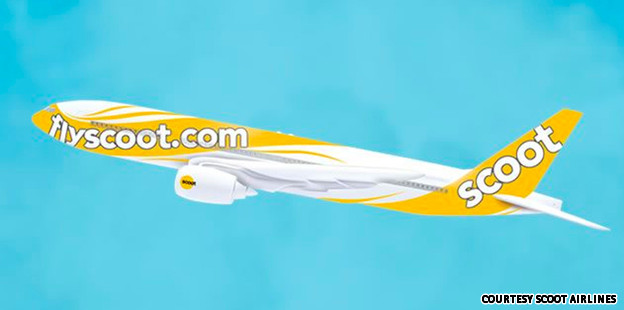
Scoot will operate flights using ex-Singapore Airlines Boeing 777-200.

Scoot have announced that the airline will fly to Sydney, Australia and Gold Coast, Australia in June. While the airline recently announced that the airline will commence flights to Tianjin, China in August. The airline also announced that 2 more Chinese cities will be served by the end of 2012 that is not served by its parent company. It is likely to be Nanjing and Hangzhou. Nanjing has previously been served by SIA, but the service was terminated in 2009. The route is currently served by a daily Airbus 320 service by China Eastern Airlines. Nanjing, the 13th busiest airport in China is served by a number of foreign airlines including Lufthansa. While Hangzhou, the 9th busiest airport in China which is a popular tourist attraction and situated about 300km outside of Shanghai. The city is served by carriers as far as Ethiopian Airlines and KLM. The city is served by its Jetstar Asia’s four weekly flights.

So far, Scoot is a plan that is being executed well by SIA. They fly to new destinations that is not served by their parent company(with the exception of Sydney). The reason why Scoot is allowed to fly Sydney together with their parent company is that the Singapore-Sydney route has a large passenger volume and surprisingly it is the route between Singapore and Australia that has the less competition(if we compare with Perth, Melbourne and Brisbane). Only British Airways and Qantas Airways flew the route. The other routes to Perth, Brisbane and Melbourne are all served at least by 3 carriers(excluding SIA). The routes that is announced so far are all flown by Air Asia X. It seems like Scoot have hopefully to get a share of passenger that is flying with the KL-based carrier in these few years and create a new market without bringing negative effect to Singapore Airlines premium services.

Competition at Sydney will increase with Air Asia X, which has just started flying daily to Sydney on April 1. The airline has made a big changes to the carrier network by suspending flights to London, Paris, Mumbai and Dehli and most recently, Christchurch. The airline stated that the reason behind the decision is due to high operating cost which includes high fuel prices, high airport tax charges and the recently implemented taxes on airline operating in Europe. The carrier will put their focus on their core market in Australia, Korea, China and Japan which are flights around the 4-8 hours region. After the cancellation, Air Asia X announced that flights to Taipei, Perth and Tokyo will be increased. In short-term, it is unlikely that the airline will resume flights back to these suspended destination. With the share-swap deal with national carrier-Malaysia Airlines concluded last August, it is highly likely that both airline will cooperate in many areas including route network. In future, Air Asia X are expected to fly to cities in their core region, namely Adelaide, Nanjing, Xian, Wuhan, Fukuoka, Nagoya and also Jeddah which is the gateway for local Muslims to Mecca.

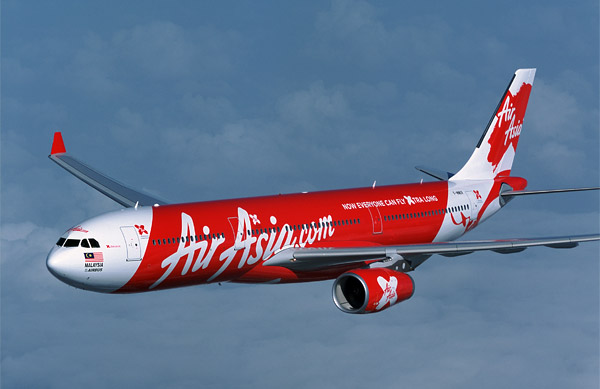
The airline currently operates 9 Airbus 330-300 with another 16 more to come. While the airline has also place orders for 3 Airbus 330-200 and 10 Airbus 350-900. Looking at the airlines order, there is a possibility that Air Asia X will operate flights back to Europe once these fuel-efficient aircraft arrives. Before the cancellation, Air Asia X operates European flights using the 4-engined Airbus 340-300 which has a high cost of operating. But as always, Air Asia X(and also Air Asia) has a slight advantage comparing to those carriers operating from Singapore. Airport taxes and landing fees are not that high comparing to those operating from Singapore and also air traffic are not that heavy if we compare to the likes of Jakarta, Bangkok and Singapore.
Air Asia X uses Airbus 330-300 aircraft to operates its low-cost long haul flights to its core-market of Australia, China, Korea and Japan.
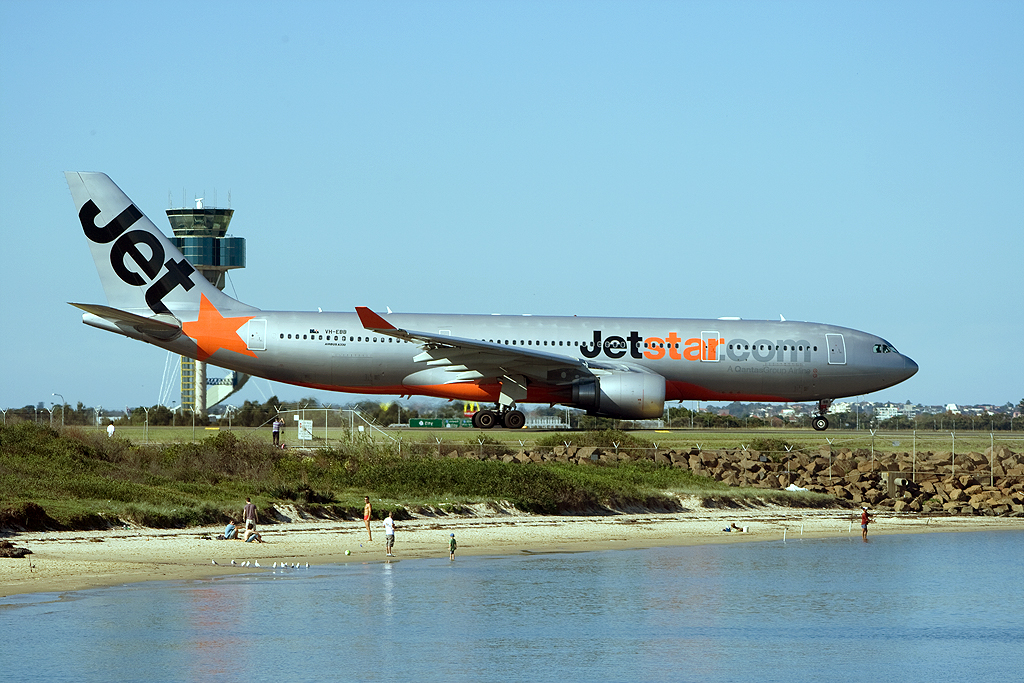
The other carrier which flies regularly on medium and long-haul route is Qantas-owned Jetstar Group. The airline together with its Singapore sister company flies regularly on flights that is more than 4 hours. Recently, Jetstar started flying the Singapore-Melbourne and Singapore-Auckland route using Airbus 330-200 which can accomadate 310 passengers. Currently, Jetstar operates 11 Airbus 330-200 and has 15 orders of the Boeing 787-8 Dreamliner. Those Airbus will return to parent company Qantas once the new 787 starts to fly with Jetstar. At the moment, Jetstar International long-haul destinations include Honolulu,Tokyo Narita, Osaka, Beijing, Bangkok, Ho Chi Minh City and Phuket. These destinations are all served from Australian cities of Sydney, Cairns , Gold Coast, Melbourne and Darwin. On the whole, Jetstar long-haul network doesn’t have many overlapping with the other 2 competitors, apart from routes between Singapore and Australia. Competition on routes between Singapore and Australia will surely be more intensify once Scoot start flying.
Jetstar Airways currently operates 11 Airbus 330-200 that flies medium and long-haul destinations.  

The move of allocating new 787 to Jetstar seems like a strategy to put more focus on Jetstar’s network rather than expanding Qantas’s current market. In recent years, Qantas has only welcome only the Airbus 380 super-jumbo jets and Boeing 737-800 jets which intends to replace its old Boeing 747-400 and Boeing 737-400 jets. Apart from that, Qantas has scaled down some of their international routes including switching to a smaller aircraft (Boeing 747 to Airbus 330) on flights to Asia. But for Jetstar, Qantas has order a staggering 110 Airbus 320 jets for the unit. 99 for both Jetstar Airways, Jetstar Asia, Jetstar Pacific and soon to fly Jetstar Japan. While the remaining 11 was initially allocated for the new Premium airlines that is going to be based at Singapore or Kuala Lumpur,, but it is likely that Jetstar will allocate these 11 jets to the recent announced Jetstar Hong Kong. Not to forget that Qantas 787 order are going to the Jetstar unit first instead of Qantas mainline fleet shows Qantas focus on this new segment of the aviation market. Previously, Jetstar has plans to operate to Europe including Rome and Athens, but those plans are scrapped in the end. But there is a possibility that such plans to commence flights to Europe with Air Asia X cancelling all their services to Europe.

Jetstar branded airline include Jetstar Airways, Jetstar Asia, Jetstar Pacific, Jetstar Japan and Jetstar Hong Kong.

Surely the battle will continue and it is likely that the battle will be more and more intense and fierce between these rivals. One interesting fact is that, these airlines are all backed by a big airline group. Scott is a full subsidiary of Singapore Airlines, Jetstar Group is backed by Australian carrier Qantas Airways while Air Asia X is owned by Asia’s largest low-cost carrier Air Asia Group.
By,
The Editor
6/4/2012

sunnaero@gmail.com

Saturday, 24 March 2012

Discover Japan Airlines Boeing 787 Dreamliner


Coming 25 March, Japan Airlines, Japan’s national carrier will receive the the brand new, highly-efficient Boeing 787-8 Dreamliner from the hands of Boeing at Paine Field, Everett, Washington. JAL will be the second carrier in the world after All Nippon Airways(ANA) to operate the Boeing 787-8 Dreamliner. We discover Japan Airlines brand new aircraft and see what JAL's plans for the new aircraft.

Despite being the second operator, Japan Airlines has created some number ones. It will be the first one to be delivered with GEnx engines, the first to be commercially fly a route to the US and the first to be used on a brand new route. The aircraft will debut on April 22 when Japan Airlines begins flying non-stop between Tokyo Narita and Boston 4 times weekly. The service will be a daily service starting 1 June. Of course, the flight is codeshare with JAL’s oneworld partner American Airlines. Japan Airlines will then deploy their new Boeing 787 Dreamliners on flights to Beijing, Dehli and Moscow from their Haneda hub. Another interesting part is that JAL will operate new flights to San Diego, US and Helsinki, Finland using their new Boeing 787 Dreamliner starting from December 2012 and March 2013 respectively. It seems that Japan Airlines have put more focus on international routes, linking up well with their partner airlines. This is because of 3 new low-cost carrier that are going to operate this year: Peach Aviation, Air Asia Japan and Jetstar Japan.
Tokyo (Narita) = Boston Flight Schedule from April 22, 2012
Flight Number
Route
Dep. Time
Arr. Time
Days of Operation
Aircraft
Remarks
JL008
AA5922
Narita - Boston
11:30
11:20
Daily
787-8
Operating 4 times a week on Mo, We, Fr, Su until May 31, 2012
JL007
AA5921
Boston - Narita
13:20
16:00 + 1
Daily
787-8
Source: Japan Airlines
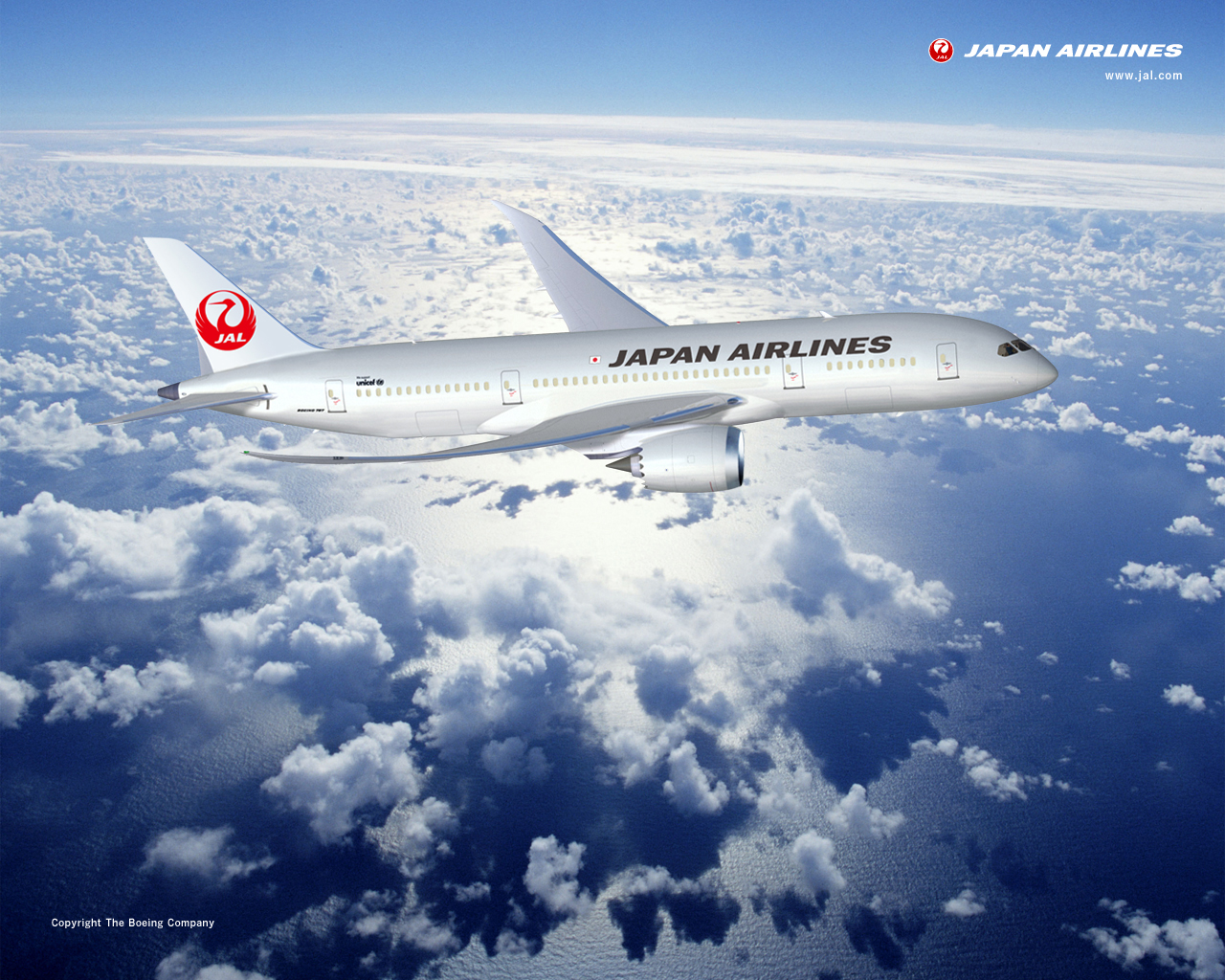
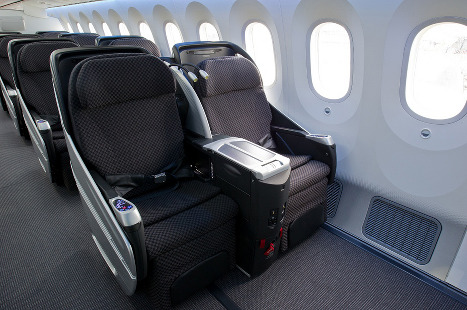
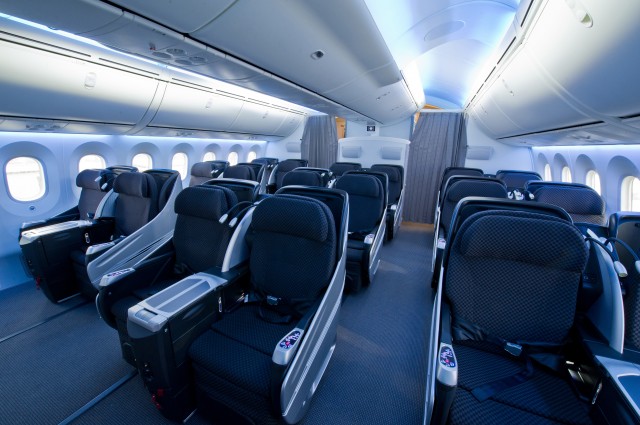
The airlines first dreamliner is configured in a two class layout, with 42 seats in business class and 144 seats in economy. The new aircraft will carry the airlines new livery(pic) which sees the crane circle is back on the tail of the aircraft and the usual white colour as the background.

Source: Japan Airlines

JAL’s Boeing 787 has 44 “Executive Class” seats arranged in a 2-2-2 configuration. The seats are JAL's new 'Shell Flat Neo' seats, with a 60 inch pitch and 21 inches width. The seats will recline to about 171 degree recline. Every seat in the aircraft has a 15.4 inch touchscreen panel connects to an in-flight entertainment system running on Google's Android platform.

Source: Boeing
Source: Boeing
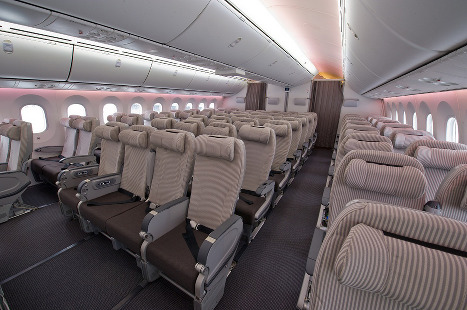
For economy class seats, the seats have a 31 inch pitch and are 18.5 inches wide. The new economy class seats is fitted with a 10.6 inch touchscreen video display. The seats is configured in a 2-4-2 layout. Every seats on the aircraft will have an AC power outlet and a USB socket. Japan Airlines will also debut their brand new in-flight entertainment system, called SKY MANGA. The new IFE will have digital editions of over 30 Japanese comic titles.

Source: Boeing


By,
The Editor
24/2/2012

sunnaero@gmail.com

Thursday, 22 March 2012

Airberlin Joins Oneworld Airline Alliance

Airberlin, the 2nd largest carrier of Germany, 6th largest carrier in Europe has officially joined oneworld alliance on 20 March 2012. Austrian airline, NIKI, a subsidiary of airberlin will join the alliance as a member affiliates. While airberlin group’s Swiss airline, Belair will be part of the alliance as a non-member affiliates.


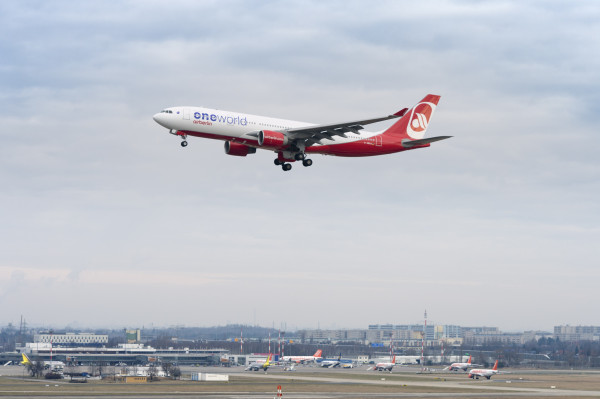
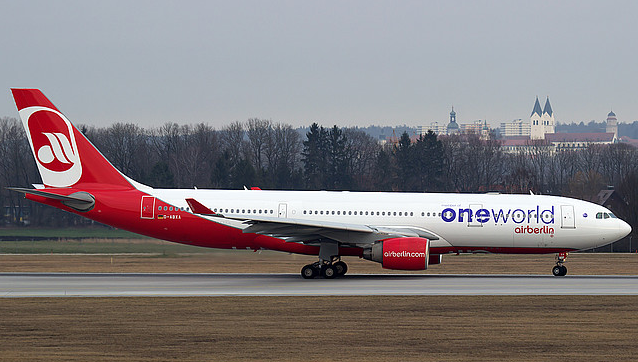
airberlin’s Airbus 330-223 with the oneworld livery lands at Berlin-Schonefeld Airport(SXF) on March 20, 2012.

Oneworld alliance welcome it’s 13th member (including Malev Hungarian and Mexicana, which now officially classified as an inactive member) and 11th active member to the alliance. Airberlin’s addition will certainly make Germany a home market for the alliance, stepping up competition for some 200 million passengers a year flying to, from and within Europe’s biggest economy. Last year, airberlin served 162 destinations in 40 countries, carrying over 35 million passengers. Apart from airberlin, oneworld alliance will welcome Malaysia Airlines that is well poised to become a full member of the oneworld alliance by end of this year. (Kingfisher Airlines integration to the alliance has been stopped)

Airberlin certainly has makes a good choice in selecting oneworld over Star and Skyteam. It is impossible for airberlin to join Star which is headed by airberlin’s domestic rival-Lufthansa. While Skyteam has a very strong pressence in central Europe, with Air France, KLM and Alitalia. The joining of airberlin will give oneworld presence in every part of the Europe. Finnair in the northern part, British Airways in the western part, Iberia in the southern part and now airberlin in the central part. In the early stages, airberlin is likely not to bring much impact to the alliance. The airline’s largest hub at Berlin-Tegel (the airline will move to Berlin Brandenburg on 3 June 2012) is only currently served by 3 member airlines that is British Airways, Finnair and Iberia. Most oneworld carriers served Germany’s financial capital-Frankfurt. Airberlin will add 38 more new destinations to oneworld’s network and introduce the countries of Iraq and Iceland to the alliance. With the introduction of airberlin to oneworld, it gives oneworld passengers another option to connect in Central Europe, rather than connecting through British Airways’s London or Iberia’s Madrid. The airline has recently increased capacity in Eastern Europe, so it is able to cover the lost of Malev Hungarian Airlines that was forced to stop their operations this February. Overall, the entrance of airberlin into oneworld gives the alliance a chance to challenge the dominance of Star Alliance in Germany with Lufthansa.


airberlin’s aircraft with the oneworld livery taking off from Munich Airport(MUC) as flight AB111P to Berlin Schonefeld(SXF) for the presentation. Check out on updates for the new airberlin aircraft carrying the oneworld logo.

Currently, oneworld has 11th airline member operating, with Malaysia Airlines expected to join the alliance at the end of the year. Star Alliance, the largest airline alliance which has 26 members, has recently added Ethiopian Airlines into their alliance and will soon announce the joining of Taiwan’s EVA Airways. While Avianca of Columbia, Copa Airlines of Panama, TACA Airlines of El Salvador and Shenzhen Airlines of China are all expected to join Star this year. Skyteam, the 2nd largest airline alliance currently has 15 members. Aerolineas Argentina, Saudi Arabian Airlines, Middle East Airlines and Xiamen Airlines of China are all expected to join the alliance this year, while Indonesia’s Garuda Indonesia are expected to join next year.

But in the future, Star Alliance may lose three members, all to rivals oneworld. BMI is likely to be took over by British Airways/Iberia parent company International Airlines Group(IAG); TAP Portugal which is going to be privatized by the Portuguese government is likely to be acquired by IAG too. While TAM Airlines of Brazil is likely to switch from Star to oneworld in favor of the recent-formed LATAM Group.


By,
The Editor
22/3/2012

sunnaero@gmail.com


Tuesday, 20 March 2012

Malaysia Airlines, the Eight Operator of the "Superjumbo" A380

Malaysia Airlines, one of the World’s five-star airline is going to be the next operator of the “Superjumbo”- Airbus 380 aircraft. The aircraft will accommodate 494 passengers in a three class configuration, seating eight passengers in First Class, 66 in Business Class and 420 in Economy. All seats are fitted with the latest individual in-flight entertainment systems, USB ports and satellite telephone facilities. The aircraft will officially debut as a thrice-weekly KL-London service (MH002/MH003) on 1 July 2012 before going daily in August. The airline will then introduce its brand new Airbus A380 onto the Sydney-Kuala Lumpur route beginning September 25th which will run as the daily MH122/123 service, replacing the current Boeing 747-400. The other daily MAS flight (MH140/141) will continue on a Boeing 777.


Malaysia Airlines new livery of the brand new A380.

Malaysia Airlines A380s will carry a dashingly revamped livery, combining the airline's iconic 'wau' (kite) symbol with modern fonts. The airline drops the red and dark blue colour in the new aircraft’s livery, adopting a slightly lighter blue in the new airliner. The airline’s A380 seating plan is almost the same as rivals Singapore Airlines and oneworld member Qantas Airways- first class in the front section of the lower deck, business class in the front section of the upper deck and economy class seats spanning both decks.

Eight 87 inch lie-flat beds with a generous 85 inch pitch (compared to 80 inches on MAS' Boeing 747) and massive 23 inch video screens will occupy first class at the front of the main deck in a 1-2-1 configuration. 66 business class seats on the upper deck will stretch out in a standard 2-2-2 layout. Each will have a 74 inch pitch (well beyond 58 inches on the Boeing 747), fold out into a 72 inch lie-flat bed and sport a 17 inch video screen.MAS' ‘Chef-on-Call’ facility, currently exclusive to first class passengers, will be extended to business class on the A380.

But recently, Malaysia Airlines does not enjoy a good time. In January, Malaysia Airlines cuts 12% of it’s international capacity with cancellation of flights to Dubai, Rome, Buenos Aires, Cape Town, Damman, Johannesburg and Surabaya. While in March, the carrier announced a loss of RM2.5billion(US$820 million) in 2011. Malaysia Airline CEO Ahmad Jauhari said that the recent losses is caused by high fuel prices which contribute around 33% of the airline’s total cost, an increase of 15%. Recently, local media reported that the Malaysian government wants the share swap deal between Malaysia Airlines and Air Asia to be reversed. The airline’s union always strongly opposed the share swap deal between both airlines that was concluded in August 2011.


Malaysia Airlines has ordered six Airbus 380s.

5 of the 6 Airbus 380 will join the airline this year, while the remaining one will join in 2013. Apart from that, new Boeing 737-800 and Airbus 330-300 are expected to join the airline’s fleet, replacing older aircraft such as the Boeing 737-400 and Boeing 747-400. With the introduction of new aircraft into Malaysia Airline’s fleet, cost can be decreased, efficiency of the aircraft can be increased. This could certainly help Malaysia Airlines to transform the airline into a healthy state.


By,
The Editor
18/3/2012

sunnaero@gmail.com

Sunday, 18 March 2012

Turkish Airlines Introduce New "Globally Yours" Livery


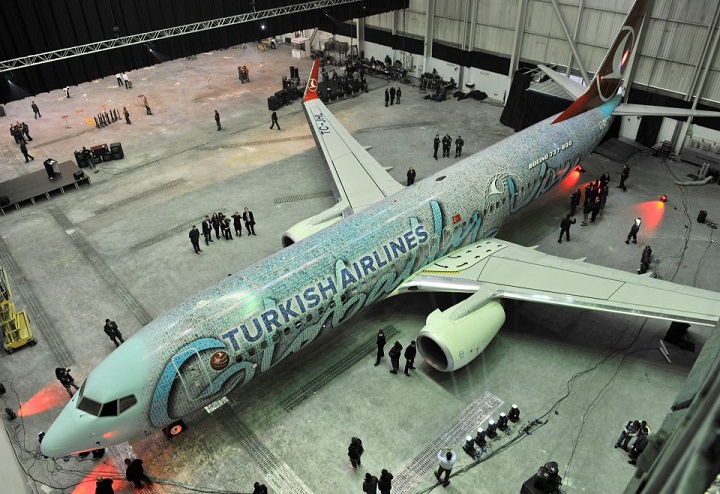
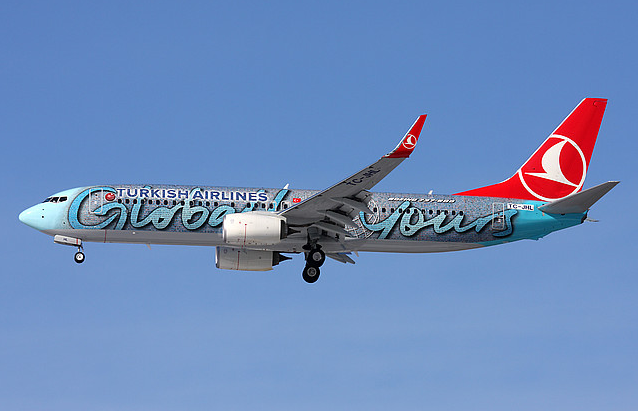
Turkish Airlines repainted one of its Boeing 737-800(TC-JHL) into a special livery which displays the company’s slogan “Globally Yours” across the fuselage. I have to say, it looks fantastic.


The special thing about the aircraft is that the paint scheme of the the entire aircraft is tiled pictures of airline staff.


The company took 4 months to assemble the 18,000 pictures of all Turkish Airlines employees.


The aircraft(TC-JHL) carrying the new livery making a final approach at Helsinki-Vantaa(HEL) on March 18, 2012.

By,
The Editor
18/3/2012

sunnaero@gmail.com